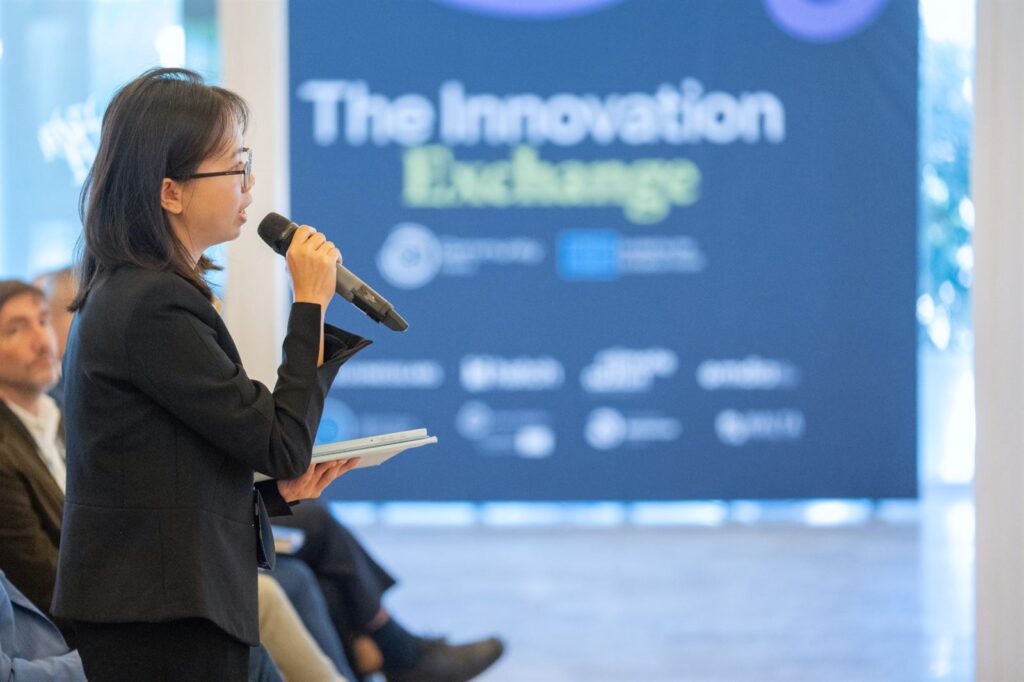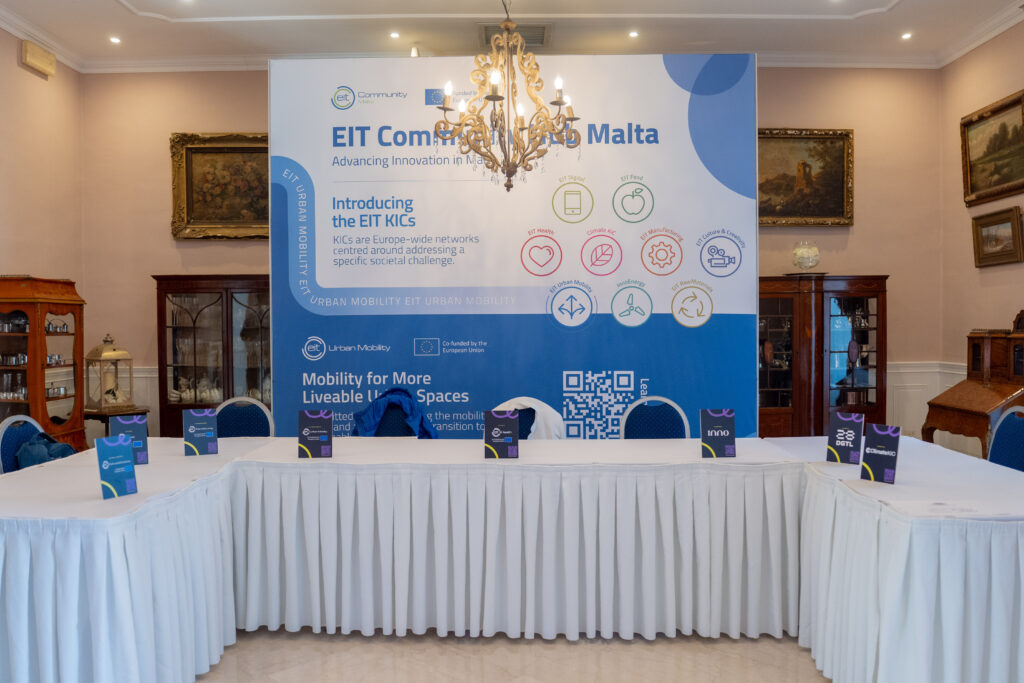
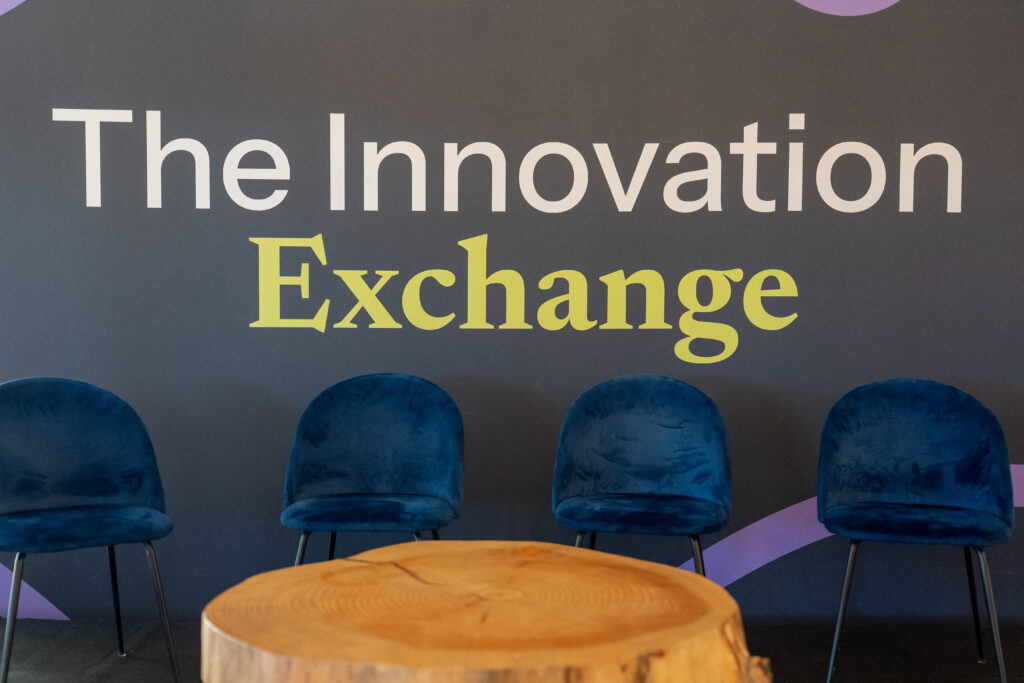
On 14 November 2025, founders, researchers, policymakers and European partners met at Villa Arrigo Hall in Naxxar for the national conference of The Innovation Exchange – Accelerating Smart Growth. The brief for the day: name what drives innovation in Malta, name what blocks it, and start clearing the way.
The conference was step three of a four-step programme. It built on ideation sessions and three exploratory workshops, and it feeds step four: helping promising startups take advantage of funding opportunities. Here's what the day covered.
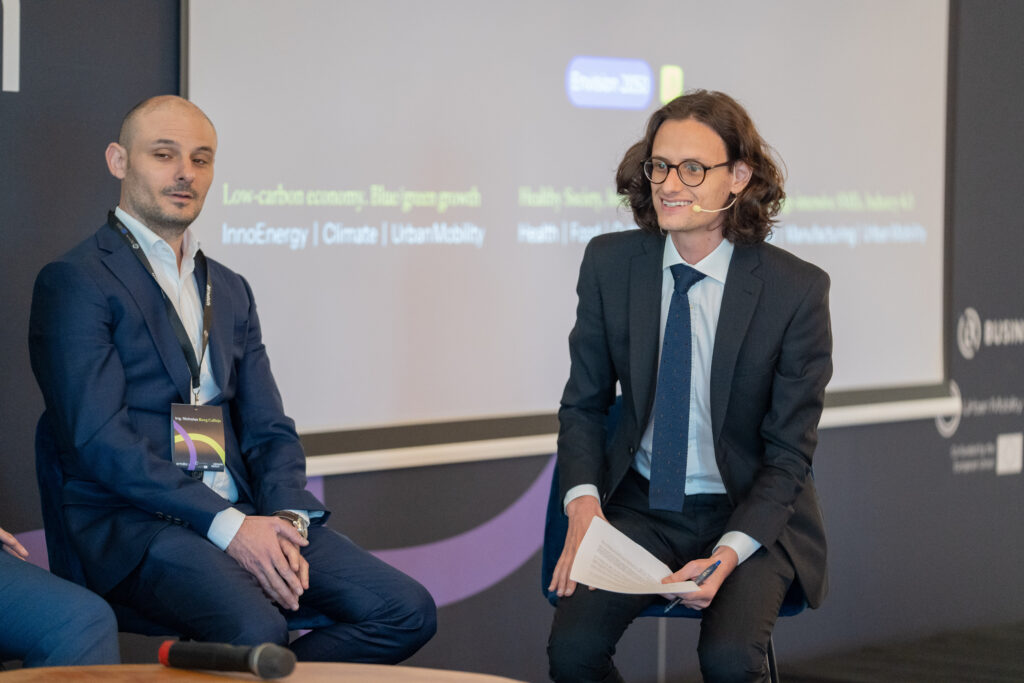
Ing. Nicholas Borg Calleja (left) on Panel 1: Innovating for a Greener Future.
Morning: a national vision, three panels
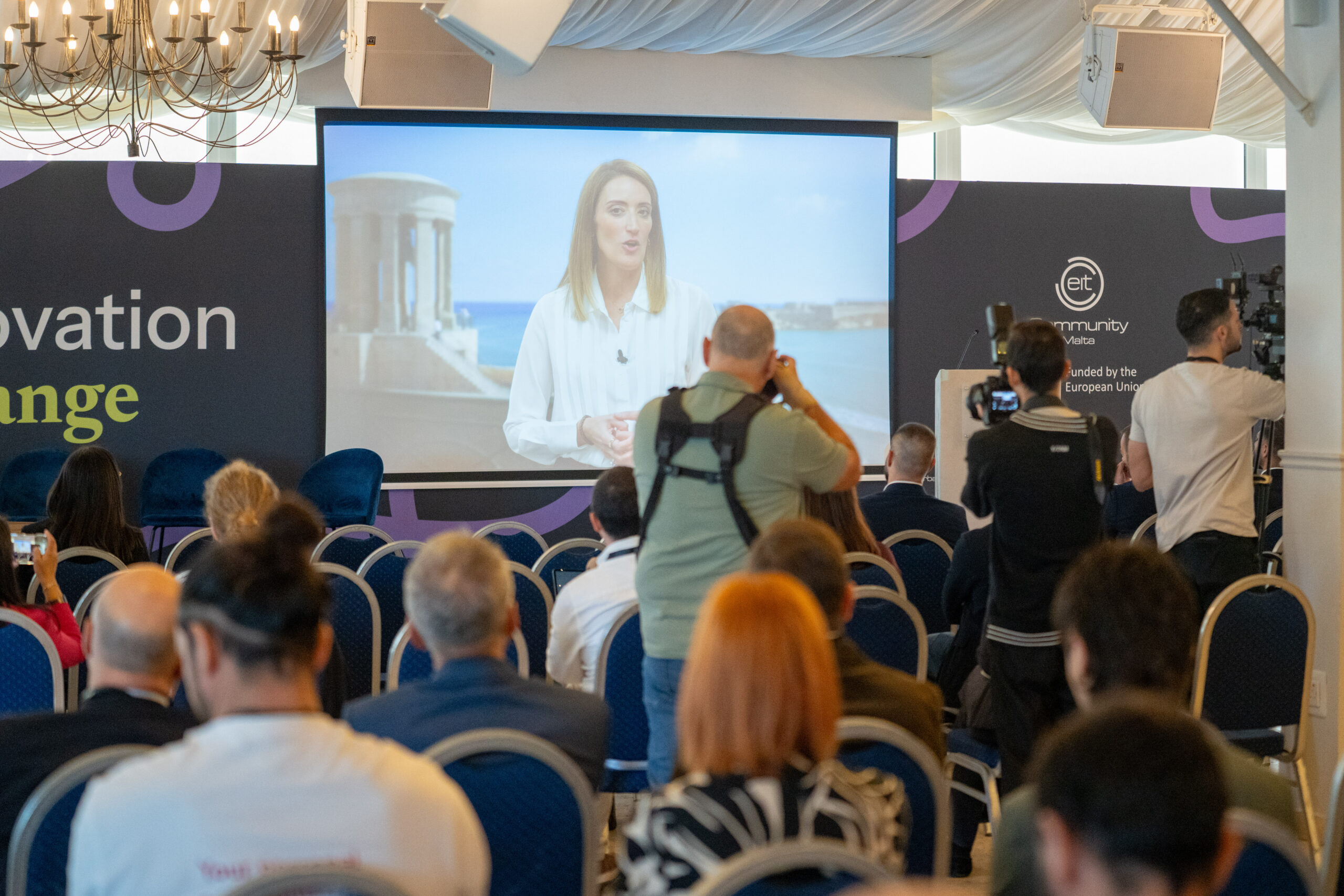
The day opened with keynotes from both government and opposition, welcomes from the EIT, the EIT Community Office and the Malta Vision 2050 team, and a recorded message from the President of the European Parliament.
Three panels followed. Each took two Malta Vision 2050 pillars, the same pairs the exploratory workshops had explored.
Innovating for a Greener Future. Low-carbon economy and blue/green economies. Moderated by Mark Lawrence Zammit, with the Climate Action Authority, Climate KIC, InnoEnergy, Ecostack Innovations and MCAST, plus the founder of ELM & Marinehound.
Empowering Communities through Social Wellness Innovation. Healthy society and inclusive society. Moderated by Trudy Kerr, with EIT Food, EIT Health InnoStars, the National Coordinator for Horizon Europe, and the founders of Kingswell Innovation and Mamori.
Smart Growth through Innovation. Knowledge-intensive SMEs and Industry 4.0. Moderated by Jon Mallia, with EIT Manufacturing, the European Digital Innovation Hub Malta at MDIA, Malta Enterprise, an AI lecturer and co-founder of SeyTravel, and an innovation and strategy consultant.
The second and third panels also carried recorded addresses from MEPs Hon. Thomas Bajada and Hon. Peter Agius.
What the workshops asked the panels to tackle
The panels didn't start from a blank page. HATCH's analysis of the three exploratory workshops distilled what participants said into six talking points for the day's dialogue with the EIT and the Government of Malta:
Strengthen the funding ecosystem: more seed and venture capital, fast-track funding that matches innovation cycles, and innovation procurement.
Develop human capital and research careers.
Foster a collaborative innovation culture: cross-sector hubs, trust and interdisciplinary projects.
Streamline regulation: faster approvals, regulatory sandboxes, and tenders that reward value over the lowest price.
Turn Vision 2050 into milestones: five- and ten-year steps on the way to 2050.
Support eco-innovation and circularity.
Malta's innovators are hungry but hamstrung. Malta has the ideas and digital skills to compete, but risk-aversion, red tape and scant venture capital are keeping those ideas from taking off.
HATCH, workshop analysis, 2025
Afternoon: urban mobility, up close
After lunch and the expo, the Urban Mobility Spotlight turned to how people and goods move around Malta. It opened with an introduction to EIT Urban Mobility in Malta.
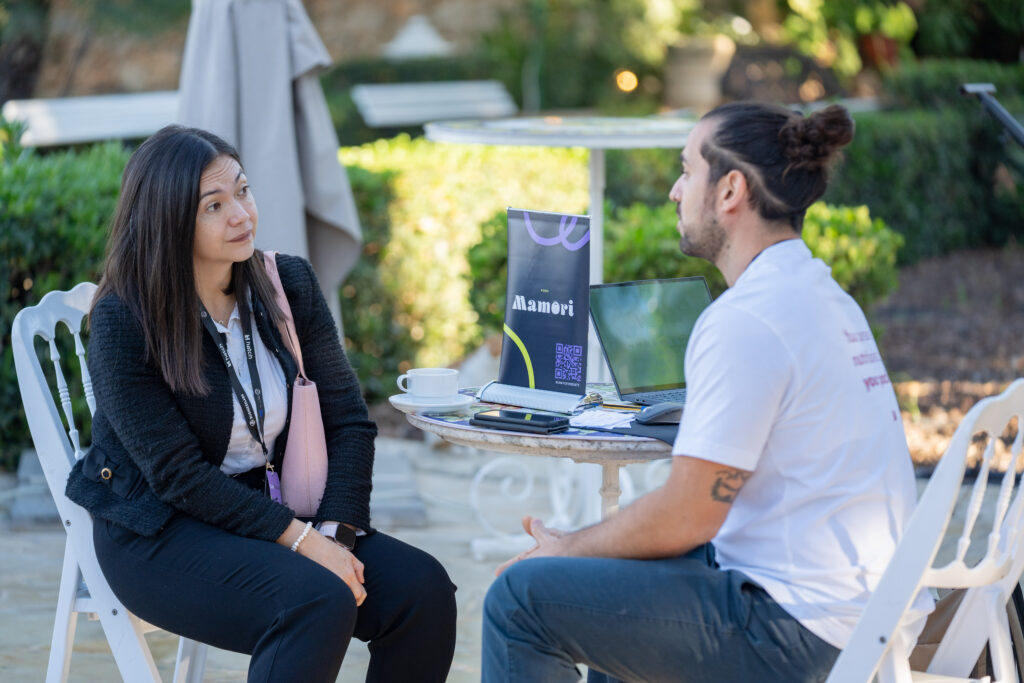
Mamori, a healthy-eating platform, talking with a visitor at the lunchtime expo.
The UrbanLogix solutions showcase followed, with Latvian Post, MaltaPost, StudjUrban, a Riga urban logistics case study, Bruntor from Latvia and Fleevigo from Malta. Joaquín Pinto Ferrand of Caps Solutions then moderated a discussion with speakers from the earlier sessions.
Six startups gave live demos, facilitated by Malta Accelerate:
Bruntor: an electric last-mile vehicle, demonstrated on site
Tomatiq: route optimisation for urban freight, with results from its Qormi pilot
WhereToPark: intelligent parking and kerbside mapping
Lane Patrol: road safety analytics
Technovator: wireless EV charging and infrastructure tools, with an eBike charging case study from Pembroke Council
Ride & Stride: support for active mobility and cycling infrastructure
Evening: deep tech as an enabler
Part three, sponsored by Deep Tech Foundry, looked at deep tech as an enabler. Opening remarks came from the EIT Community Office, Dr. Melchior Cini of Xjenza Malta's Research & Innovation Unit, and Nathalie Farrugia, Chief Officer for Corporate Relations at Malta Enterprise. A portfolio presentation on deep tech impact, From Commercialisation to Impact, came next, and networking drinks closed the day.
What comes next
The conference wasn't the finish line. Step four, Taking it Forward, supports promising startups to take advantage of funding opportunities.
The Innovation Exchange is a recurring programme. Between full editions it continues through initiatives such as a panel HATCH organised in October 2026 at the Urban Mobility Mixer, a conference run by the EIT Urban Mobility Hub in Malta and Deep Tech Foundry. The next edition is in November 2027, with exact dates and venue to be announced, along with dates for the next workshops.
If you're building in one of the sectors the day covered, you don't need to wait for the next edition. Applications are open all year: apply to HATCH and tell us where you are today.