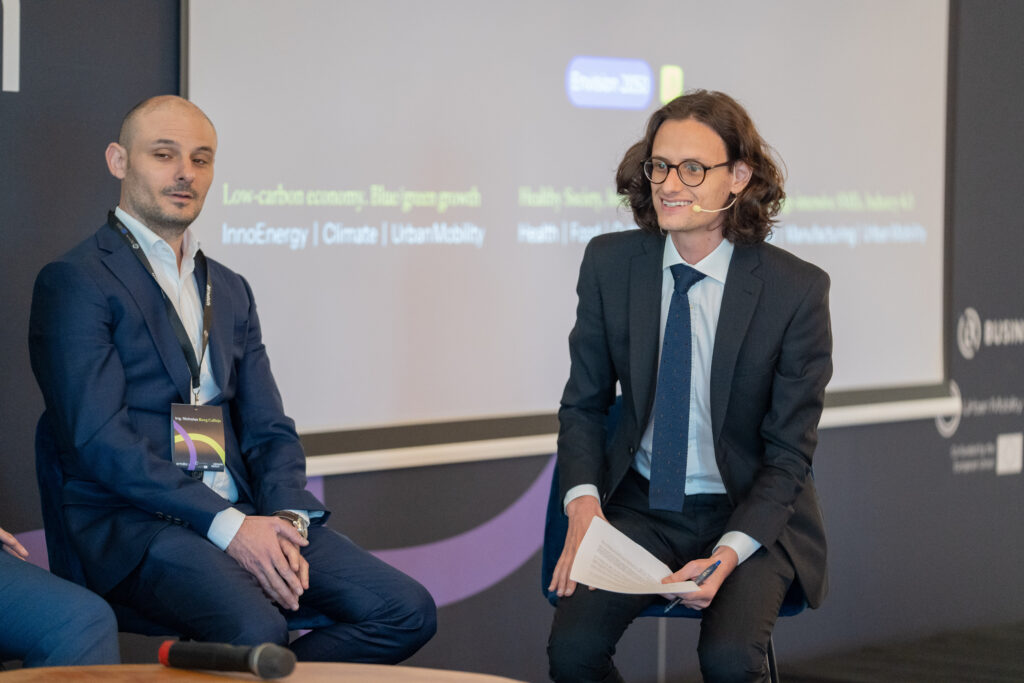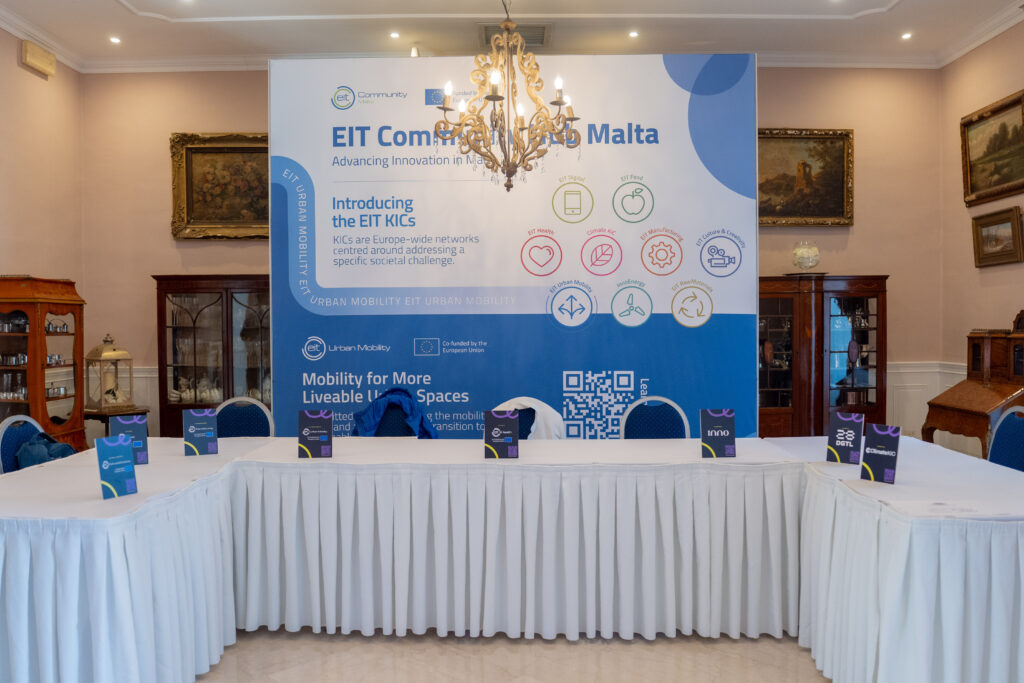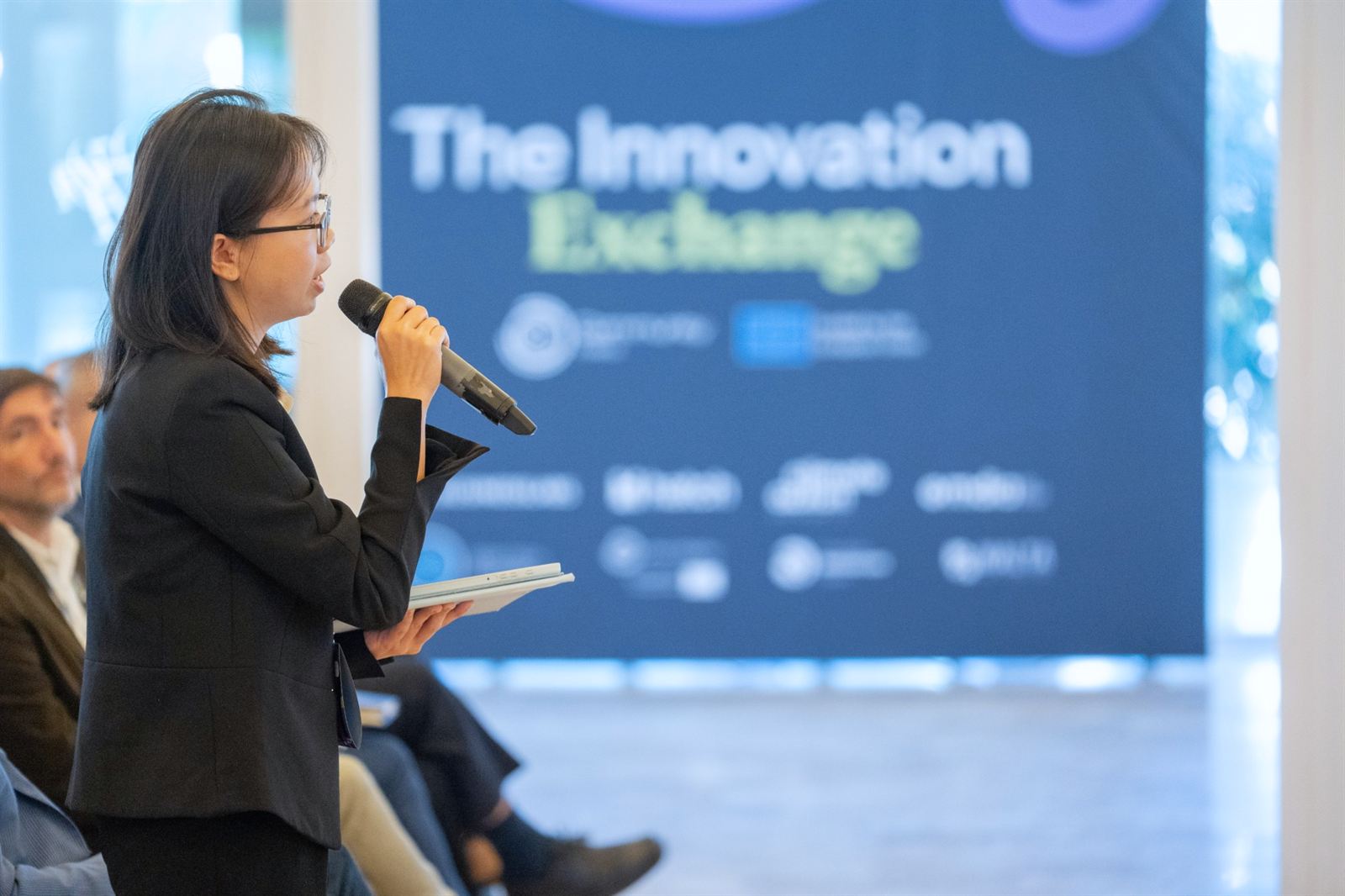
Before The Innovation Exchange reached Villa Arrigo Hall, it started with conversations. Three exploratory workshops brought founders and entrepreneurs together to pin down the drivers and barriers of innovation that matter most in Malta.
In each workshop, 15–20 participants from across the economy took part. Jon Mallia led Smart Growth through Innovation, Mark Lawrence Zammit led Innovating for a Greener Future, and Trudy Kerr led Empowering Communities through Social Wellness Innovation. The EIT Community Office ran the workshops with BusinessLabs and HATCH, ahead of the national conference on 14 November 2025.
Every workshop is captured in a recap of about a minute. Watch all three, or find them on the HATCH YouTube channel.
One question, three lenses
Every track asked the same thing: what are the barriers and drivers of innovation for enterprises in these sectors? What changed was the lens.
Each track paired target areas of the EIT's Knowledge and Innovation Communities with two pillars of Malta Vision 2050. The European Institute of Innovation & Technology brings a broad network of partners, mentoring and funding opportunities. Vision 2050 keeps the conversation rooted in Malta's own priorities. Together, they keep the dialogue ambitious and locally relevant.
Where the workshops fit
The workshops were step two of The Innovation Exchange's four steps:
Ideation sessions brought together Malta's national context, European opportunities and the needs of local enterprise.
Exploratory workshops, the three tracks on this page, gathered founders and entrepreneurs to identify the drivers and barriers most relevant to Malta.
The national conference on 14 November 2025 opened the discussion to the public.
Startup applications support promising founders to take advantage of funding opportunities.
Each track came back as a panel at the conference, under the same Vision 2050 pillars. Read what we heard there.
What the workshops surfaced
Participants worked in sectors as different as software, e-waste and physiotherapy, yet the same barriers kept coming up. These are the headline findings from HATCH's analysis of each track.
Smart Growth through Innovation
A risk-averse culture, where disruption is viewed with suspicion and new solutions are adopted slowly.
Funding that moves too slowly: a six-month wait for local funding is no use when innovation cycles are short, and venture capital is scarce.
A small home market that forces companies to scale abroad.
Incentives that favour imported talent over local start-ups, when start-ups need speed.
Innovating for a Greener Future
Long-term visions like 2050 feel distant, and short political cycles create inertia.
Uptake that depends on grants: PV uptake collapses without them, and agricultural grants require incorporating as a company.
Fragmentation, eroding expertise in areas such as water treatment, and a shortage of skilled engineers.
Congestion that needs new mobility models, not more lanes.
Empowering Communities through Social Wellness Innovation
A lack of collaborative frameworks and trust, with critical-thinking gaps and a fear of sharing knowledge.
A gap between research and implementation: good research, little commercialisation, and temporary research contracts.
Missing shared resources, finance and support structures, and tenders that reward the lowest price.
The easiest wins: cross-industry collaboration and “safe spaces” that allow failure.
Six themes across all three
Whatever the sector, the same six themes ran through every workshop:
Risk aversion and cultural inertia
Barriers to funding and investment
Skills and talent shortages
The need for collaboration and networks
Regulatory and bureaucratic obstacles
Education and mindset
What the data says
The findings closely match the European Innovation Scoreboard 2025, which rated Malta a “moderate innovator”, at 95% of the EU average and 12th in the EU. Malta's strengths were digitalisation, non-R&D innovation spending, trademark applications and foreign doctorate students. Its weakest scores were for government support for business R&D, venture capital and new doctorate graduates: much of what participants described. The 2026 edition, published in July 2026, moved Malta into the strong innovator group for the first time.
HATCH's analysis turned these findings into an agenda for the conference panels. See what the workshops asked the panels to tackle.